← All postsProduct
Introducing Flo yield tokens
Every position you mint through Flo is now a transferable, composable ERC-20. Backed 1:1 by securities held at SEC-registered broker-dealers.
Shailesh Gupta
CEO
4 min read
Every position you mint through Flo is now a transferable, composable ERC-20. Backed 1:1 by securities held at SEC-registered broker-dealers.
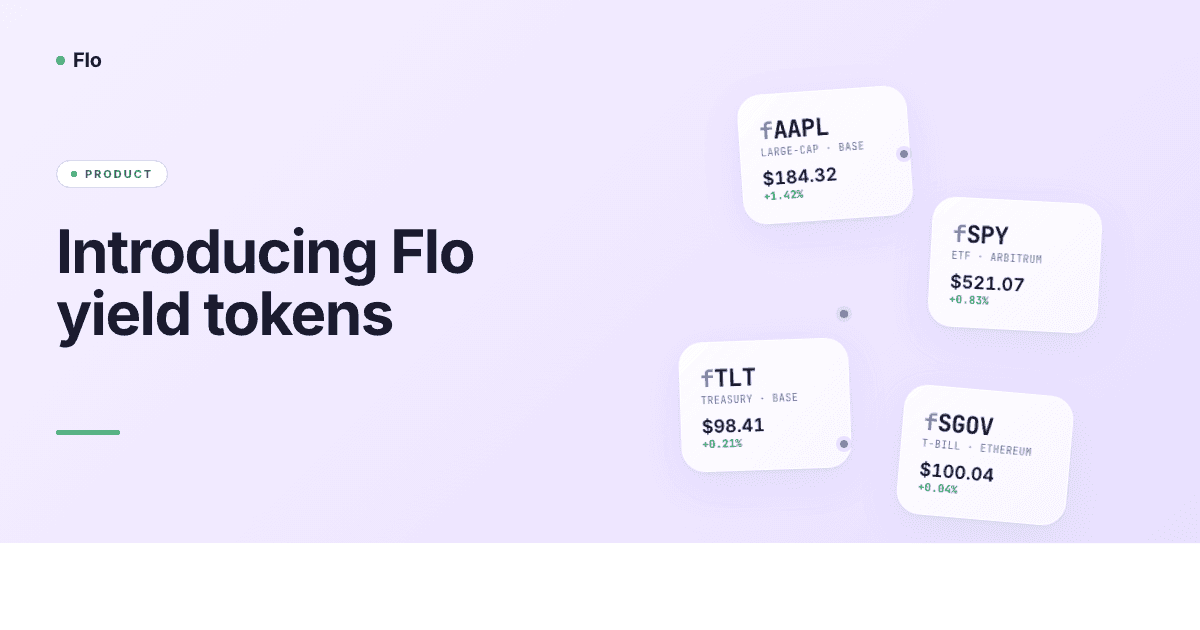
Today every position minted through Flo is an ERC-20 in your wallet. fAAPL, fSPY, fTLT, fSGOV. Same ticker as the underlying, prefixed with f. Transferable, lendable, composable. Backed 1:1 by the underlying security held at IBKR or Alpaca. Our two SEC-registered broker-dealer partners.
Why ERC-20. Every DeFi protocol speaks ERC-20 fluently. Money markets, perp DEXs, structured products, automated rebalancers. They all expect a fungible, transferable token with a known interface. We considered an ERC-1155 wrapper for portfolio-style products, but the loss of compatibility wasn't worth the gain. Standards win.
The 1:1 backing chain. Three layers, each verifiable independently:
We don't custody the token. The integrator's user does. We custody the underlying. At the broker-dealer, in segregated accounts, under the SPV's name. The token is a contractual claim. The SPV is bankruptcy-remote.
What composability unlocks. An fAAPL holder can post their position as collateral in an Aave-style money market. They can swap to fNVDA without ever touching cash. They can earn yield on fSGOV (which itself is a Treasury proxy) and use that yield as collateral for a leveraged fAAPL long. None of that is possible with a brokerage account today. Tomorrow they're all one transaction.
An ERC-20 doesn't replace your brokerage. It composes with the rest of your stack.
Limits worth being honest about. Voting rights don't pass through. Dividends are credited on-chain at the next block after the broker receives them, not in real time. Corporate actions (splits, mergers, spin-offs) reflect via signed webhook updates and a contract-level rebase, but there's a few-second window where the on-chain supply can diverge from the underlying. We pause transfers during that window. Operational realities of bridging a 24/7 ledger to a 9:30-to-4 market.
Built right, the trade-offs are small relative to what becomes possible. fAAPL is what AAPL should have always been. Composable, transferable, instantly settled, programmable.